

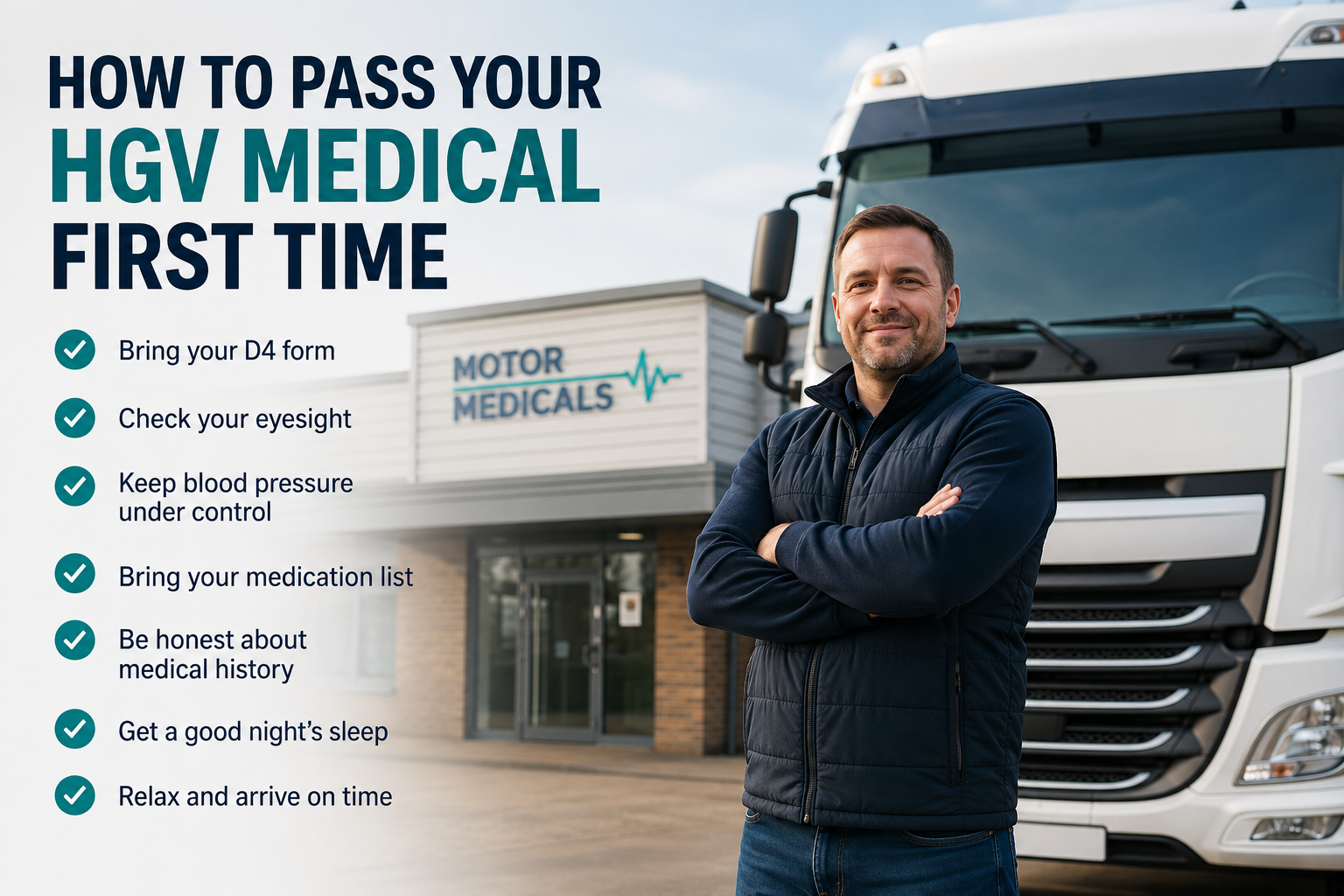
Your HGV medical is an important part of keeping your Group 2 driving licence. Most drivers pass without any problem, but delays can happen if you arrive unprepared, forget your glasses, have high blood pressure on the day or do not bring the correct information.
This guide explains how to prepare for your HGV medical, what the doctor checks, and how to give yourself the best chance of passing your D4 medical first time.
What Is an HGV Medical?
An HGV medical is a medical assessment required for Group 2 drivers. This includes lorry, bus and some professional driving licences. The medical is recorded on the DVLA D4 medical form.
The doctor checks whether there are any health issues that could affect your ability to drive safely. This includes your eyesight, blood pressure, medical history, medication and any conditions that may affect alertness, concentration or control of the vehicle.
At Motor Medicals, HGV/D4 medicals are available at 40+ clinic locations nationwide, including Manchester, Birmingham, Leeds, Bradford, Sheffield, Liverpool, Leicester, Nottingham, Telford, Stoke-on-Trent and more.

What Does the HGV Medical Include?
A typical HGV medical includes several checks. These are designed to assess whether you meet the required medical standard for professional driving.
- Medical history review
- Eyesight test
- Blood pressure check
- Medication review
- BMI check
- Physical examination where required
- Completion of the D4 medical form
The medical itself is usually straightforward. The main reason drivers run into problems is poor preparation.
1. Bring the Correct D4 Medical Form
The D4 medical form is the document the doctor completes during your assessment. You can usually download it from the DVLA website or bring the form sent to you by the DVLA.
Some clinics may have spare D4 forms, but you should not rely on this. Bringing your own form reduces the chance of delay.
Before your appointment
- Check you have the latest D4 form.
- Bring the full form, not just one page.
- Do not complete the doctor’s section yourself.
- Bring your driving licence or passport for ID.
2. Prepare for the Eyesight Test
Eyesight is one of the most important parts of the HGV medical. You must meet the required visual standard for Group 2 driving.
If you wear glasses or contact lenses, bring them to the appointment. If you normally use distance glasses for driving, you should wear them for the vision test.
Drivers sometimes fail or get delayed because they forget their glasses. This is avoidable.
- Bring glasses if you use them.
- Bring contact lenses if you wear them.
- Bring your spare glasses if you have them.
- Have a recent optician check if you are unsure about your vision.
3. Get Your Blood Pressure Under Control
High blood pressure is one of the most common reasons drivers have problems at their HGV medical.
Your blood pressure can rise because of stress, rushing, caffeine, nicotine, poor sleep or physical activity just before the appointment. It can also be high because of untreated or poorly controlled hypertension.
To improve your reading on the day:
- Arrive early so you are not rushing.
- Avoid strong coffee or energy drinks before the appointment.
- Avoid smoking or vaping immediately before the check.
- Sit calmly before your blood pressure is measured.
- Take your usual medication as prescribed.
If you already know your blood pressure is high, speak to your GP before booking your medical. It is better to deal with the issue early than risk a delay.

4. Bring Your Medication List
The doctor will ask about your medication. This includes prescription medication, over-the-counter medication and anything that could affect alertness or driving.
Bring a clear medication list or prescription printout. This helps the doctor complete the form accurately.
Medication that may need further discussion includes:
- Strong painkillers
- Sleeping tablets
- Medication causing drowsiness
- Insulin or diabetes medication
- Heart medication
- Medication for epilepsy or seizures
- Medication for mental health conditions
Taking medication does not automatically mean you will fail. The key question is whether the condition and medication are compatible with safe driving.
5. Be Honest About Your Medical History
The HGV medical is not the time to hide important medical information. The D4 form asks about conditions that may affect driving safety.
You should tell the doctor about relevant medical history, including:
- Diabetes
- Heart disease
- Stroke or TIA
- Epilepsy or seizures
- Blackouts or fainting
- Sleep apnoea
- Vision problems
- Alcohol or drug-related problems
- Significant mental health conditions
Many drivers with medical conditions can still drive professionally if the condition is stable, treated and meets the DVLA standard.
6. Bring Relevant Hospital Letters
If you have a significant medical condition, bring any recent specialist letters. This can help avoid delays.
Useful documents may include cardiology letters, diabetes clinic letters, sleep apnoea reports, neurology letters, eye clinic letters and discharge summaries after surgery or hospital admission.
7. Do Not Ignore Sleep Apnoea Symptoms
Sleep apnoea is important for professional drivers because it can cause daytime sleepiness. This can increase the risk of accidents.
Symptoms may include loud snoring, waking up choking, morning headaches, poor concentration or feeling sleepy while driving.
If you have symptoms, speak to your GP. If you already use CPAP treatment, bring evidence that your condition is treated and controlled where available.
8. Check Your Diabetes Control
Drivers with diabetes may still pass an HGV medical, but the doctor will need to understand your treatment and whether you are at risk of hypoglycaemia.
If you take insulin or medication that can cause low blood sugar, bring relevant information to your appointment. This may include clinic letters, blood sugar monitoring records or specialist advice.
9. Know When Your HGV Medical Is Due
HGV drivers usually need medicals at key stages during their driving career.
- When applying for a provisional Group 2 licence.
- At age 45.
- Every 5 years after age 45.
- Every year after age 65.
Do not leave your medical until the last minute. If extra medical information is needed, this can delay your licence application or renewal.
What Should You Bring to Your HGV Medical?
D4 Medical Form
Bring the full D4 form for the doctor to complete.
Photo ID
Bring your driving licence, passport or another accepted form of ID.
Glasses or Contacts
Bring any glasses or contact lenses you use for driving.
Medication List
Bring a prescription list or the names and doses of your medication.
Where Can You Book an HGV Medical?
Motor Medicals offers HGV/D4 medicals at 40+ clinic locations nationwide. Locations include Manchester, Birmingham, Leicester, Derby, Preston, Liverpool, Leeds, Bradford, Telford, Stoke-on-Trent and many more.
View Clinic Locations
Book HGV Medical
Common Reasons HGV Medicals Are Delayed
- Forgetting glasses or contact lenses.
- High blood pressure on the day.
- Not bringing a medication list.
- Not knowing important medical history.
- Missing hospital letters for significant conditions.
- Attending too late before a renewal deadline.
- Incomplete or incorrect D4 form details.
Preparing properly reduces the chance of needing a repeat appointment or further paperwork.
Can You Fail an HGV Medical?
Yes, but many drivers with medical conditions still pass if they meet the required standard.
A failed or delayed medical usually means the doctor needs further information, or the condition may not currently meet the standard for professional driving.
Examples include uncontrolled high blood pressure, unsafe levels of sleepiness, recent blackouts, unstable heart conditions, poor vision or medical conditions that increase the risk of sudden incapacity.
How to Improve Your Chance of Passing First Time
- Book early before your licence deadline.
- Bring your D4 medical form.
- Bring photo ID.
- Bring glasses or contact lenses if worn.
- Bring a medication list.
- Bring relevant hospital letters.
- Avoid rushing before your appointment.
- Avoid caffeine or nicotine immediately before your blood pressure check.
- Speak to your GP early if you know your blood pressure is high.
Why Choose Motor Medicals?
- 40+ clinic locations nationwide
- GMC-registered doctors
- 2,000+ five-star reviews
- Eye test included
- D4 forms available in clinics where possible
- Fast online booking
- Experienced provider of driver medicals
Related Driver Medical Guides
Frequently Asked Questions
How do I pass my HGV medical first time?
Bring the correct D4 form, photo ID, glasses or contact lenses if worn, medication list and any relevant medical letters. Try to arrive relaxed and avoid caffeine or nicotine immediately before your blood pressure check.
What can make you fail an HGV medical?
Possible reasons include poor vision, uncontrolled high blood pressure, recent blackouts, unsafe sleepiness, unstable heart conditions or medical conditions that do not meet the required Group 2 standard.
Do I need to bring glasses to my HGV medical?
Yes, if you wear glasses or contact lenses for driving, bring them to your appointment.
Does an HGV medical include an eye test?
Yes, the D4 medical includes an eyesight assessment.
How often do HGV drivers need a medical?
You usually need a medical when applying for a provisional Group 2 licence, at age 45, every 5 years after age 45, and every year after age 65.
Can I pass an HGV medical with diabetes?
Many drivers with diabetes can still pass, depending on treatment, control and the risk of hypoglycaemia. Bring relevant diabetes information if available.
Can high blood pressure affect my HGV medical?
Yes. High blood pressure is one of the common reasons for delay. If you know your blood pressure is high, speak to your GP before your appointment.
Where can I book an HGV medical?
Motor Medicals provides HGV medicals at 40+ clinic locations nationwide. You can view locations online or book directly through the HGV medical page.
Book Your HGV Medical
Motor Medicals offers HGV/D4 medicals at 40+ clinic locations nationwide.